
Latest Academy Blogs
Select article category or search for specific article:
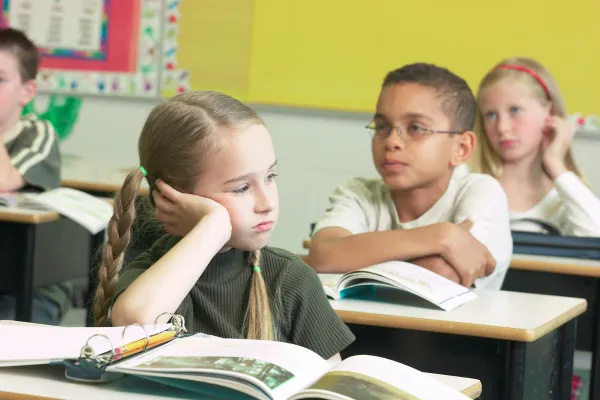
Clever Tricks to Improve Student Motivation in the Classroom
Effective student motivation in your classroom will map out your success trail.
Motivated students want to be in your classroom. Unmotivated students don't and they will cause you grief.
But motivation is not always easy to create - especially for some students.
You need to nurture some students into becoming motivated. It just doesn't come naturally to some.
There are some Dirty Little Secrets that we will share with you later. But they won't work until you lay the groundwork.
The following SIMPLE TIPS will lay the groundwork for helping to get your unmotivated students on board.
#1 - Show students how achievement benefits them
This is a conventional approach, but it works.
Tell students that getting good grades, working well, and making an effort do lead to fulfillment in adult life.
Whether that means going to uni, getting a decent job, or buying a house, and so on.
Even if students don't buy into it, the notion will be planted and they will think about it.
#2 - Create challenges that students can master
Give students incremental challenges. For example, for the student who chronically doesn't do homework,
Brian Mendler suggests you ask students to do one problem for the next day, saying that you're going to call on her for the answer.
Between 90 and 95 percent of typical students who lack motivation, says Mendler, will at least prepare that one problem.
Mendler reasons that students who lack motivation have been so accustomed to thinking that they can't be successful, that they have to be given small opportunities so they "may be reawakened" to the fact that they can be successful.
#3 - Focus on the teaching and learning process
Be aware of the characteristics of a task need to have elements that support motivation.
For example:
Is there enough time for the task?
Can the student be successful at it?
Is there some novelty to it?
Are students sure of the purpose of it?
Should it be done by oneself or with a partner?
#4 - Build rapport to establish relationships
If you invest enough chips in your "goodwill account" with certain students, you can make a "withdrawal" for which you demand better behaviour and more academic effort.
Building Rapport while relief teaching requires a different approach to classroom teaching.
Give rewards for an immediate gain.
Use this strategy to obtain a quick change in behavior.
#5 - Be an optimist
Teachers need to be optimists. You should believe that a student can change. Especially for those working with difficult students, teachers have to fight against pessimism, skepticism, and cynicism.
"Anytime I've ever heard myself engaging in biased thinking [about a student's abilities], I know first and foremost that I have to wage a battle with me or else I am not going to be a player in influencing and motivating kids," Mendler says.
For example, he talks about one teacher on the verge of burnout, who decided to engage in "mental gymnastics"; that is, imagining that when students walk in the door, it's the first day of school.
For that teacher, the first day of school holds the most promise, energy, and hope that everything good is possible. The teacher said that he noticed that not only did his own attitude change, but so did the student.
#6 - Ride the change roller coaster
Remember that change is a roller coaster ride.
Students will have ups and downs even as they move forward. Like all of us, students will revisit old behaviour many times, even as they try to acquire new behaviours.
Give any strategy at least five tries in a two- or three-week period. If it seems to produce some ups, even with the "backsliding," then the strategy is taking hold.
#7 - Choose persuasion over leverage
Use leverage and persuasion to help change kids.
Leverage asks, "How will I get this student to work?"
Persuasion asks, "How will I show this student that when he gets his homework done his life improves in a way that he values?"
Teachers tend to overuse leverage, which the most challenging kids dismiss outright.
Calls home to parents, time outs, and even grades may have little effect on students, if kids are not motivated by parental approval, being part of "time in," or achievement.
#8 - Try a variety of strategies
Be courageous enough to integrate new knowledge, including unconventional strategies for working with challenging students.
Multiple strategies are necessary because, as I have mentioned thousands of times, nothing is set in concrete. One size does not fit all when it comes to improving student motivation .
#9 - Take good emotional care of yourself
The consequence of not looking after yourself is burnout.
This could include getting support from a trusted colleague to talk about a trying student, stress positives, or even give "physical support" by arranging to take on a disruptive student during a hard moment.
While poorly motivated students are often intent on pushing our buttons to try and get us to throw in the towel, helping them to succeed first requires an attitude of not giving up on them.


Subscribe to get up to date tips, strategies, resources and guidance on all things relief teaching.
Relief Teaching Academy is a service of EPC Capital Pty Ltd.
© Copyright 2023. EPC Capital Pty Ltd. All rights reserved.
Send us a message